Why Gut Health is Important
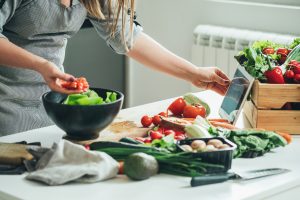
Our guts are made up of trillions of microorganisms, including both beneficial and potentially harmful bacteria, that make up the gut microbiome. Good bacteria play an important role in helping us digest and absorb the nutrients from the food we eat.
Dysbiosis describes an imbalance or change in our gut bacteria and may lead to us not being able to digest and absorb the nutrients properly. Dysbiosis is also associated with other health conditions such as obesity, diabetes, and gastrointestinal diseases like irritable bowel syndrome (IBS). Canada has one of the highest rates of IBS estimated at 18% compared to the global average of 11%.
The gut also plays a role in immunity and mood. Supporting gut health is key not only for digestion and nutrient absorption, but also for overall wellbeing and mental health.
Our lifestyle can impact our gut health. For good gut health, add physical activity, get good sleep and reduce stress in your life.
Nutrition and lifestyle (physical activity, quality sleep and stress management) are all important for keeping our gut microbiome happy!
To promote good gut health, look for food and recipes with:
- Fiber & Prebiotics
- Probiotics
- Plant-Based Proteins
- Healthy Fats
Fiber for Gut Health
Fiber is a type of carbohydrate that feeds the good bacteria in your gut. Having a fiber-rich diet improves gut health by contributing to digestion, regular bowel movements, reducing bad cholesterol and decreasing the risk of some cancers. According to Health Canada, most Canadians are only getting about half of their daily recommendation of fiber (25-38g/d).
Dietary fiber can be found in fruits, vegetables, whole grains, legumes and nuts.
Prebiotics are Specific Fibers that Support Gut Microbiome
Prebiotics are a type of fiber which is “food” for your gut bacteria. Prebiotics promote the growth of good bacteria. Prebiotics can be found in vegetables (asparagus, onions, leeks, root vegetables), whole grains, nuts and seeds as well as in fermented dairy products like yogurt, buttermilk and kefir.
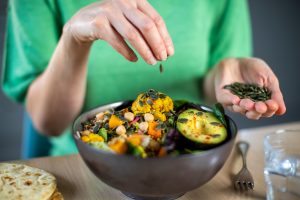
Ideas to Increase Fiber & Prebiotic in Your Diet:
- Use whole grains (whole grain bread, brown rice, oats)
- Add nut and seed toppers (flax seeds, chia seeds, walnuts)
- Add in extra fruits and vegetables
- Eat fruits and vegetables with their peel when possible
Add in Probiotics
Probiotics are good bacteria that are found in both food and also as part of your gut microbiome! Probiotics are created naturally in the fermentation process of foods, but not all fermented products will contain the live version of the probiotic so it is important to check the food label. When live probiotics are consumed in adequate amounts, they can help decrease antibiotics related diarrhea, manage IBS symptoms like bloating and help our gut digest fiber.
Probiotics can often be found in dairy products like yogurts and kefirs and in soy products like natto, miso and tempeh. Fermented fruits and vegetables are also a rich source of probiotics such as sauerkraut, pickles and kimchi. Look for pickled vegetables in the refrigerated section because shelf-stable canned products use high temperatures which kills the bacteria. Cooking will kill the probiotics so enjoy the foods cold or warmed to room temperature.
Always read the nutrition labels and choose products with “live active cultures.”
Ideas to Increase Probiotic Intake:
- Use pickle juice or miso for making salad dressings.
- Make smoothies with probiotic kefir or yogurts.
- Add fermented vegetables to sandwiches or wraps.
Choose Plant-Based Proteins
Choose plant-based proteins more often as they are a source of fiber and prebiotics which help promote gut bacteria diversity. Plant-based proteins that are a source of fiber include legumes like kidney beans, chickpeas, edamame beans and lentils and nuts and seeds like walnuts, almonds and sesame seeds.
Ideas to Increase Plant-Based Proteins:
- Replace half of the meat in a recipe with a plant-based protein (pasta sauce made with half ground beef and half lentils or crumbled tempeh).
- Add a salad topper like roasted chickpeas or candied pecans.
- Add edamame beans to stir-fried vegetables.
- Enjoy fruit with nut butters or add nut butters to smoothies.
Healthy Fats Reduce Gut Inflammation
Gut inflammation can disrupt normal gut functions, leading to reducing digestion and absorption of nutrients. Including healthy fats in your diet such as omega-3 fatty acids and polyunsaturated fats (PUFAs) can help reduce inflammation in your gut. Omega-3 fatty acids and PUFAs (fish, avocado, flax seed, walnuts) can help reduce gut inflammation and risk of inflammatory bowel disease.
Ideas to Increase Healthy Fats:
- Fatty fish (Arctic char, mackerel, herring, salmon, sardines and trout)
- Olive Oil
- Walnuts
- Flax Seeds
- Avocado
QUICK MEAL IDEAS FOR GUT HEALTH
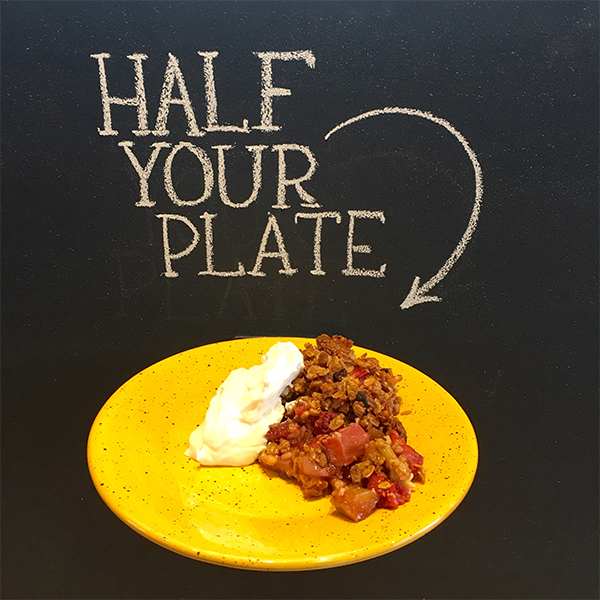
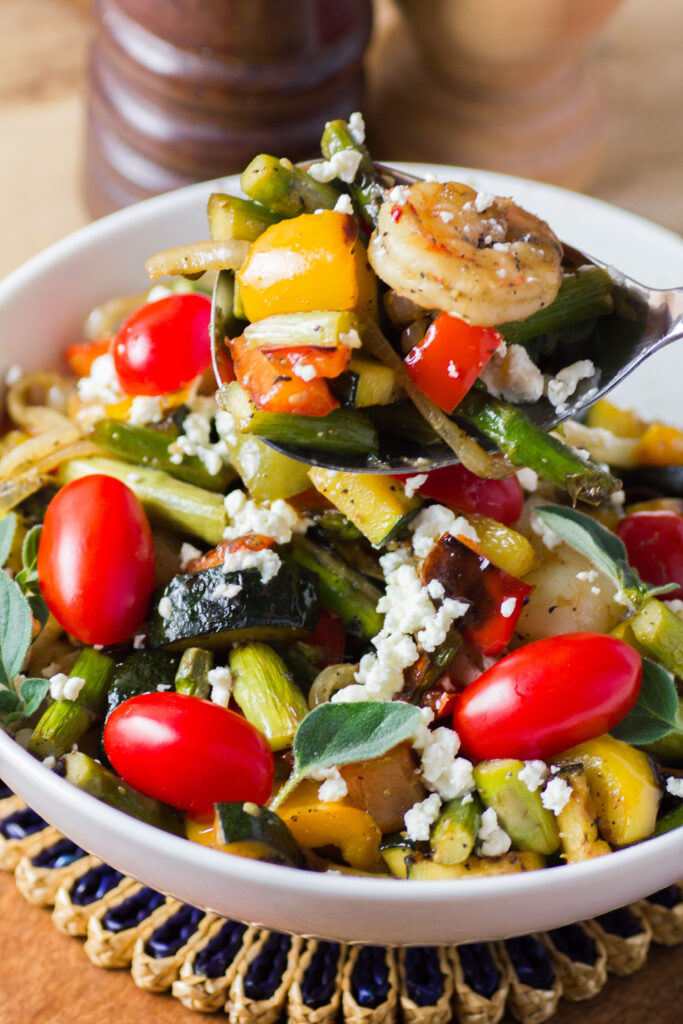
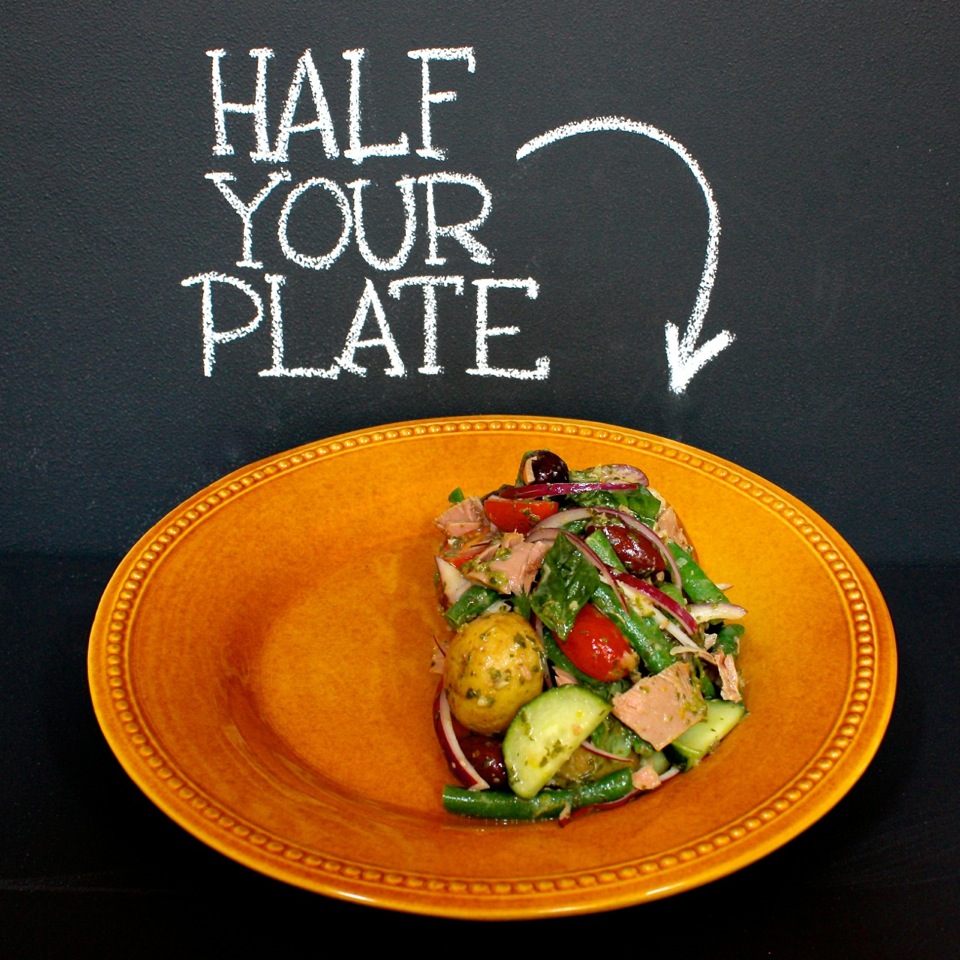
To get you started on your gut health journey, check out these 5 recipe ideas below. They are loaded with fiber, prebiotics, plant-based proteins and healthy fats. We also provide some additional tips on how you can further support your gut health through some easy modifications of recipes. Look for recipes that include a variety of whole vegetables, whole grains and plant-proteins. Aim for half a plate of fruits and vegetables as they are a rich source of fiber and nutrients.
Oatmeal or Overnight Oats Topped With Whole Fruit and Nuts

Start the morning with a bowl of oatmeal or overnight oats which can be prepared in under 10 minutes and is an excellent source of fiber. Flavour your oats with an endless combination of fruits and nuts for added fiber, plant based protein and healthy fats.
Fiber & Prebiotics: oats, fruit
Plant-Based Protein: nuts
Healthy Fats: nuts
TIP: Make a chia seed fruit jam in advance which is an easy way to add both fiber and flavour. Chia seed fruit jams can also be enjoyed with toast or yogurt.
Instant Pot Chicken Vegetable Cashew Stirfry
We love an easy instant pot recipe and this one is loaded with fiber, prebiotics and healthy fats. Saute diced chicken with olive oil before tossing it with a stir fry sauce (store bought or homemade). Cook the chicken on manual high pressure for 4 minutes. After releasing the pressure, add in your favourite vegetables and cashews and saute and cover with a lid until vegetables are tender.
Fiber & Prebiotics: vegetables
Plant-Based Protein: cashew
Healthy Fats: olive oil
TIP: Swap half the chicken for a plant-based protein like beans for added fiber and prebiotics to support your gut microbiome.
Dill Pickle Veggie Avocado Chickpea Mash Sandwich
This sandwich recipe is loaded with fiber, healthy fats and plant-based proteins to support gut health. It can be prepared in 10 minutes and is bursting with tangy flavour from the use of dill and pickle juice.
Fiber & Prebiotics: chickpeas, avocado, whole grain bread, vegetables
Plant-Based Protein: chickpeas
Healthy Fats: avocado
TIP: To add probiotics for gut health, choose pickles that contain “active live cultures.” Check the nutrition label to confirm this, and note that these products are typically found in the refrigerated section.
Harissa Chickpea and Roasted Veggie Sheet Pan Meal
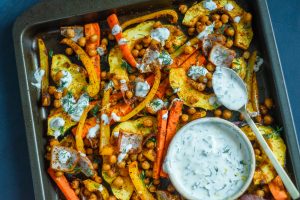
An easy sheet pan meal that takes 25 minutes to prepare packed with fiber, plant-based protein and healthy fats. This recipe delivers on big flavour with its variety of roasted vegetables and chickpeas topped with a rich lemon yogurt sauce.
Fiber & Prebiotics: vegetables, chickpeas, quinoa, yogurt
Plant-Based Protein: chickpeas
Healthy Fats: olive oil
TIP: When shopping for yogurt, check the nutrition label for “active live cultures” as the probiotics will support gut health.
Salmon on Veggie and Leek Lentils
This baked salmon filet served with a side of vegetables, leeks and lentils is a great choice for fiber, plant-based proteins and healthy fats. Salmon is rich in omega-3 fatty acids which can help reduce gut inflammation.
Fiber & Prebiotics: vegetables, lentils
Plant-Based Protein: lentils
Healthy Fats: Salmon, olive oil
TIP: Add more vegetables that are high in fiber and prebiotics to support the growth and activity of good bacteria in your gut. Vegetables that are great prebiotics include onions, asparagus, cabbage, and snow peas.
Key Takeaways
You can support your gut health by including foods that promote good bacteria and reduce inflammation in your gut.
For gut healthy meals, include foods that are have:
- Fiber & Prebiotics
- Probiotics
- Plant-Based Proteins
- Healthy Fats
By making mindful meal choices, you can support your gut bacteria and gut health.
Amy Chow is a Registered Dietitian based in Langley, BC. With over a decade of experience, Amy has a special interest in pediatric nutrition, food allergy management, digestive health, and eating disorder recovery. She is the founder of Find BC Dietitians Inc. and is passionate about connecting people with nutrition experts across BC.