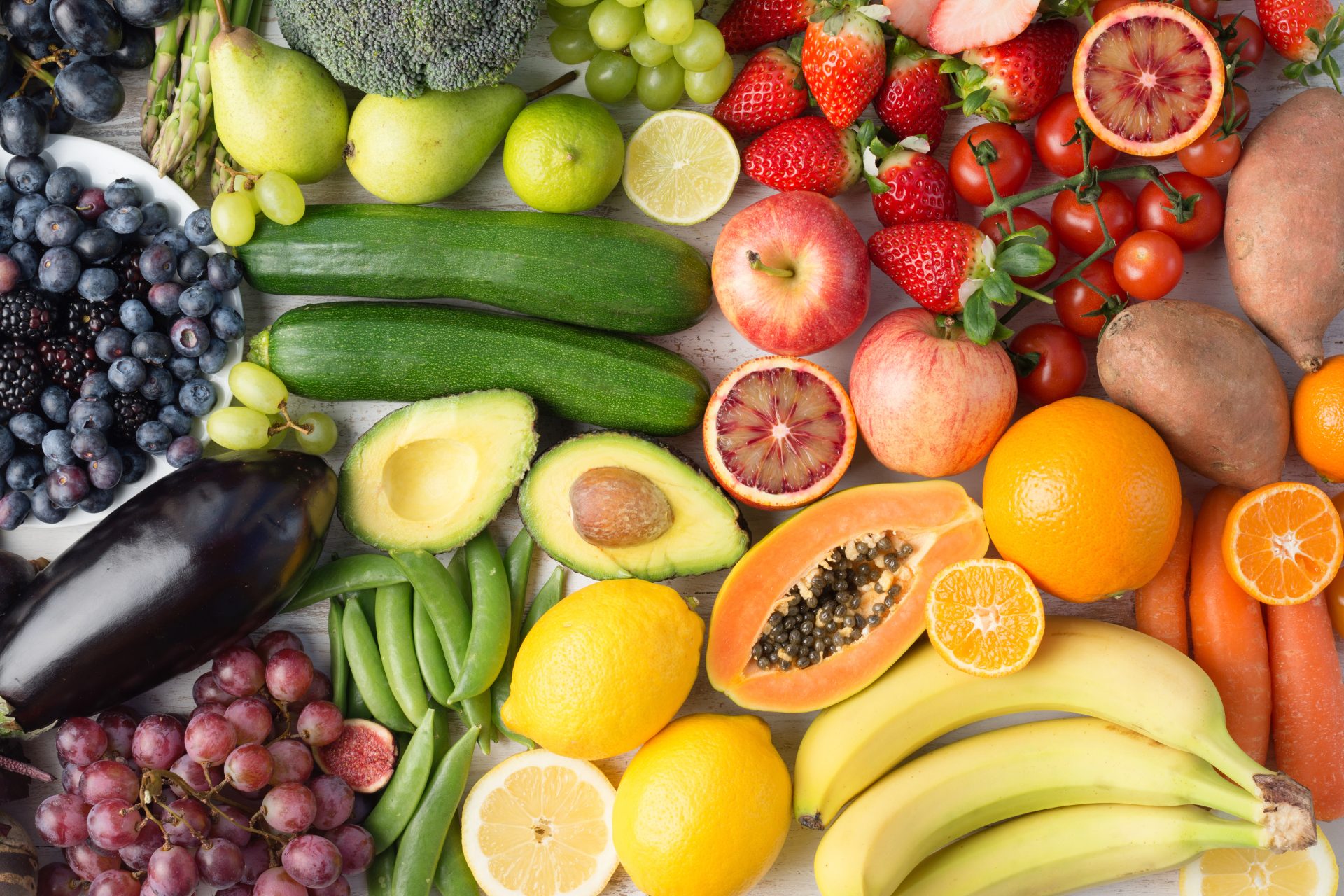
The Canada Food Guide showcases a wide variety of colourful fruits and vegetables and encourages people to eat the rainbow. This not only makes our plate of food look more appealing but by incorporating all the different colours from a variety of produce, you will get the different types of vitamins, minerals and phytonutrients to support a healthy body.
80% of Canadians do not eat enough fruits and vegetables. Fresh, frozen, canned, and dried fruits and vegetables all count and can help us meet half your plate. In this blog, we will highlight the key benefits of a few different phytonutrients (Carotenoids, Flavonoids, Betalains, Chlorophylls) that are giving fruits and vegetables their naturally occurring colours and how they support health in many ways.
Breaking Down the Rainbow: Nutrients by Colour
Red, Blue and Purple Produce
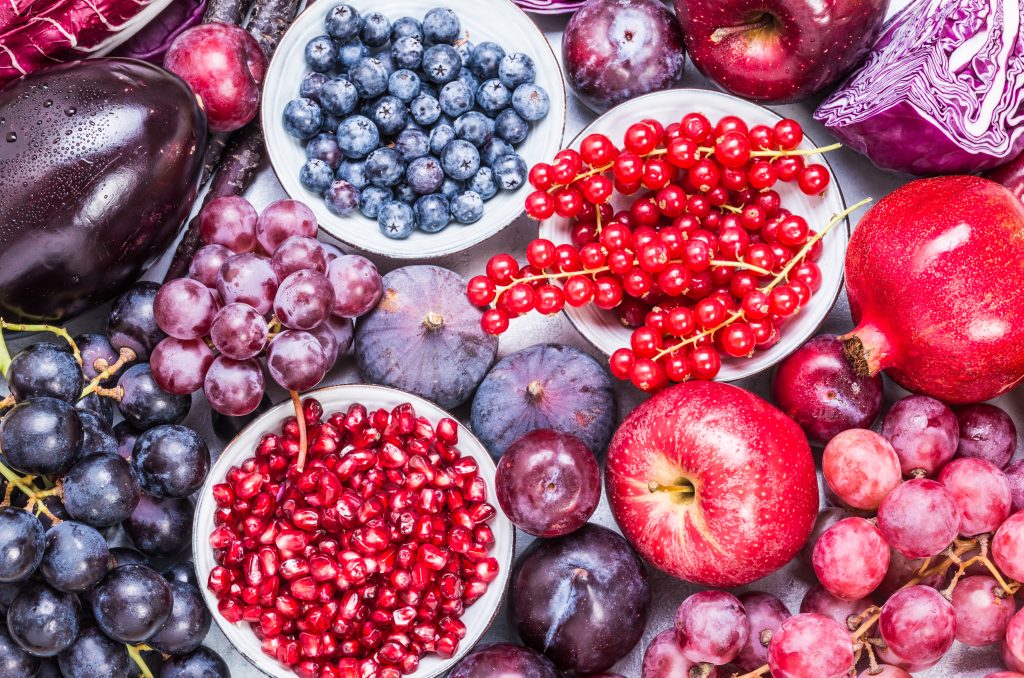
Anthocyanins are a part of the flavonoid family and they are responsible for the colors, red, purple, and blue colors in fruits and vegetables. Anthocyanins are known for their antioxidant qualities, and have been linked to improved memory, reducing inflammation, lowering blood sugar and improving heart health.
Betalains are a group of reddish pigments found in plants – they are best known for giving beets their deep red colour and have been used widely for natural food colouring. Although betalains are not well absorbed by the body, research suggests they may still offer antioxidant benefits and may help benefit heart health.
Eating red, blue and purple fruits or vegetables with powerful plant compounds a few times a week can help boost your fibre, vitamin C and potassium intake.
Here are some ways to include more red, blue and purple fruits and vegetables in your diet:
- Add blueberries or mixed berries to oatmeal or yogurt
- Use frozen strawberries in smoothies
- Add purple cabbage to salads(like this one), slaws, or tacos
- Snack on apples instead of juice
- Add pomegranate seeds to a charcuterie board
- Roast eggplants for bowls or blend it as a dip (i.e. baba ghanoush)
Orange & Yellow Produce (and a little red)
Carotenoids are the orange, red, and yellow pigments found in plants that give them their colors. There are over 600 carotenoids, with the most commonly known one as beta-carotene or vitamin A. Carotenoids have been linked to eye health, immune support, reducing inflammation and lowering lower blood sugars.
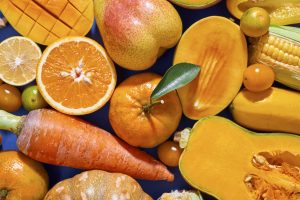
Lycopene is a carotenoid known for its antioxidant properties and also gives off red colour in produce. Lycopene may reduce risk for some cancers.
Eating orange and red fruits or vegetables a few times a week can help you get enough carotenoids, which the body can convert to vitamin A, along with fibre, vitamin C and potassium.
Here are some ways to include more orange and yellow fruits and vegetables in your diet:
- Roast sweet potatoes as a side dish
- Eat baby carrots with dip as a snack
- Add frozen mango to smoothies; try this one!
- Use pumpkin or butternut squash in soups
- Snack on sliced peppers with hummus
- Use tomatoes or tomato sauce in pasta, soups, or stews
Green Produce
Chlorophyll is responsible for the green colour in many fruits and vegetables. Chlorophyll is essential for plant photosynthesis, a process where plants turn sunlight into energy for growth. Limited research suggests that chlorophyll may act as antioxidants, reduce inflammation and cancer risks.
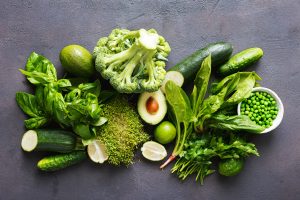
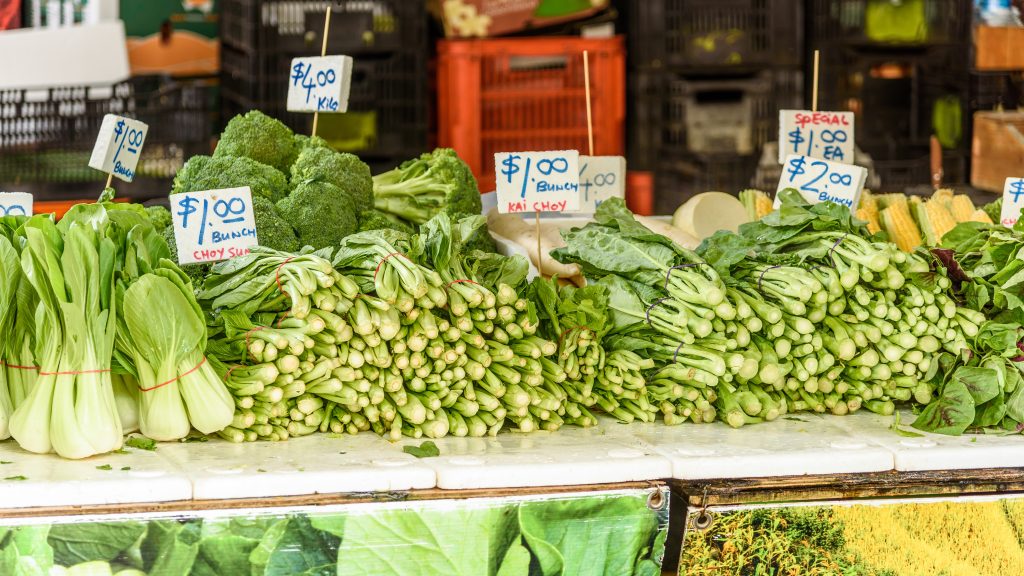
Eating dark green vegetables every day can help you get a variety of nutrients that support heart health, including vitamin K, folate, magnesium, potassium, calcium, and fibre.
Here are some ways to include more dark green vegetables in your diet:
- Top up your meals such as omelette, casserole, pasta with arugula or mixed greens
- Use mixed greens or spinach in salads and sandwiches
- Add frozen spinach, peas, and broccoli to your stir fry, casserole or soups
- Make crispy kale chips
- Try smashed snap peas or avocado on toast
White & Light Produce
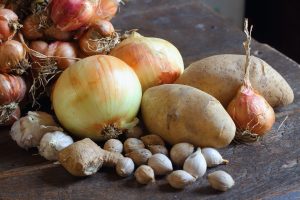
White and light-coloured fruits and vegetables are rich in flavonoids such as quercetin and other plant compounds like allicin. Quercetin and allicin are both known for their antioxidant and antimicrobial properties and have been studied for heart health and reducing inflammation.
Here are some ways to include more white fruits and vegetables in your diet:
- Use onions and garlic as your key flavours
- Roast cauliflower as a side dish
- Add mushrooms to pasta, omelettes, soups or grain bowls
- Include bananas in smoothies, oatmeal, or snacks like these tortilla rolls, great for kids too!
Variety Supports Health
While no single food is superfood – it’s the variety and our overall eating pattern that matters. Health Canada emphasizes that eating a variety of vegetables and fruits may lower your risk of heart disease. Different vitamins, minerals and phytonutrients work together through different pathways to protect our body. Some help reduce inflammation, others support healthy blood vessels, blood sugar regulation, cholesterol levels, or protect cells. One way to get all these beneficial compounds is by eating a rainbow.
References:
https://examine.com/supplements/betalains/research
https://examine.com/supplements/quercetin
https://examine.com/supplements/anthocyanins
https://examine.com/foods/carotenoids
https://examine.com/supplements/chlorophyll
https://pmc.ncbi.nlm.nih.gov/articles/PMC9268388
https://onlinelibrary.wiley.com/doi/10.1155/2019/2125070?msockid=0728addbad10606808edbf66ac6f6108
https://food-guide.canada.ca/en/healthy-eating-recommendations/make-it-a-habit-to-eat-vegetables-fruit-whole-grains-and-protein-foods/eat-vegetables-and-fruits
About the author
Amy Chow is a Registered Dietitian based in Langley, BC. With over a decade of experience, Amy has a special interest in pediatric nutrition, food allergy management, digestive health, and eating disorder recovery. She is the founder of Find BC Dietitians Inc. and is passionate about connecting people with nutrition experts across BC.